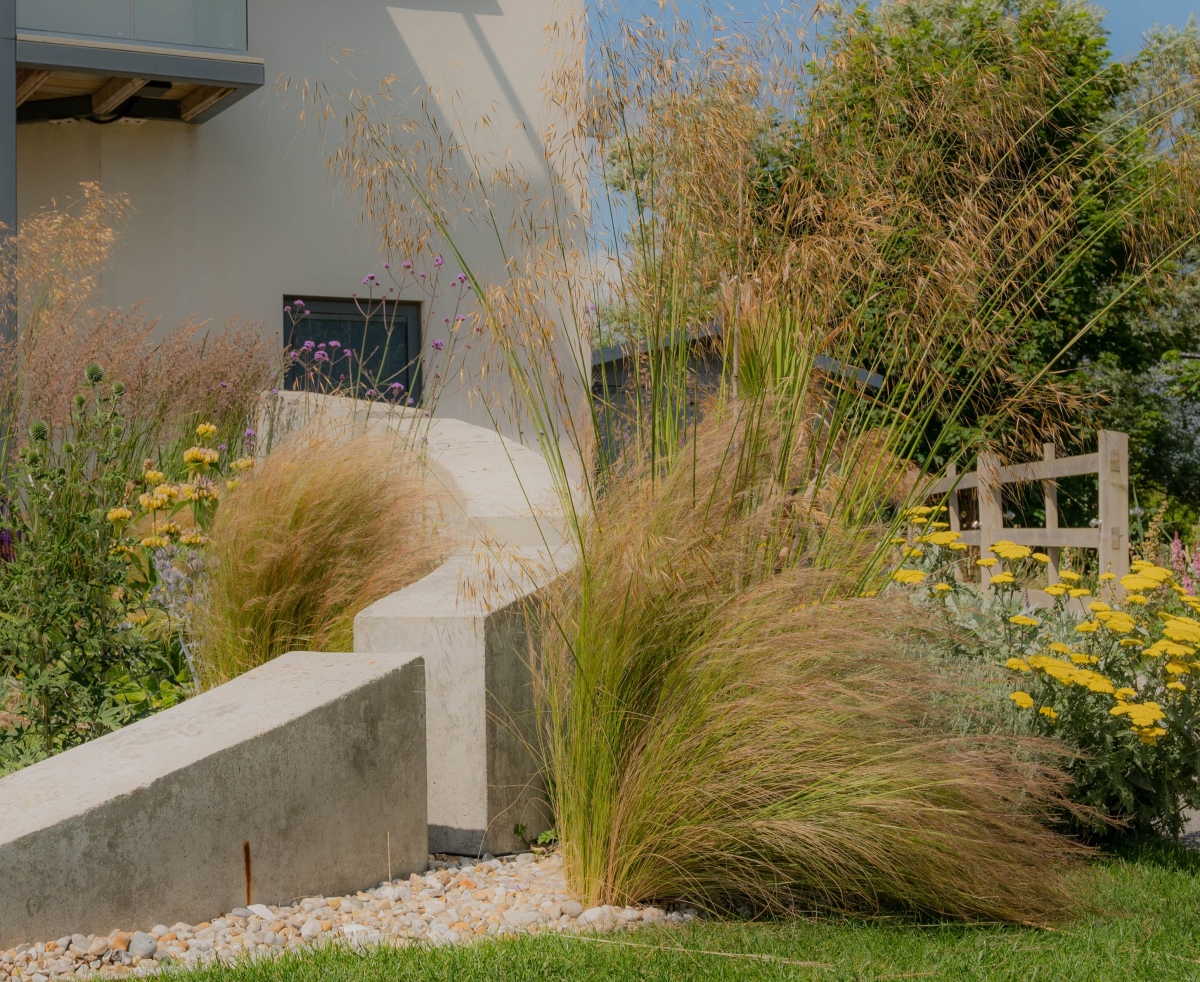
A garden designer’s guide to planting well, even in the heaviest Weald clay.
If your garden turns sticky underfoot in winter and cracks like a dry riverbed by August, it’s easy to assume you’ve drawn the short straw. Most Kent gardeners with clay soil have had the same thought at some point. But clay isn’t the enemy people take it for – once you understand what it’s doing and choose plants that actually want to grow in it, it can be one of the most rewarding soils there is.
At Ivy & Whyte, we work with a wide variety of soil conditions across Kent, from the heavy clay of the Weald to the lighter, freer-draining soils found in many coastal locations. Every garden is different, which is why understanding the ground beneath it is always our starting point.
Rather than trying to force a garden to be something the ground won’t support, we design with the conditions that are already there. Plants that are suited to clay tend to settle in faster, need less fussing over, and simply do better for longer.
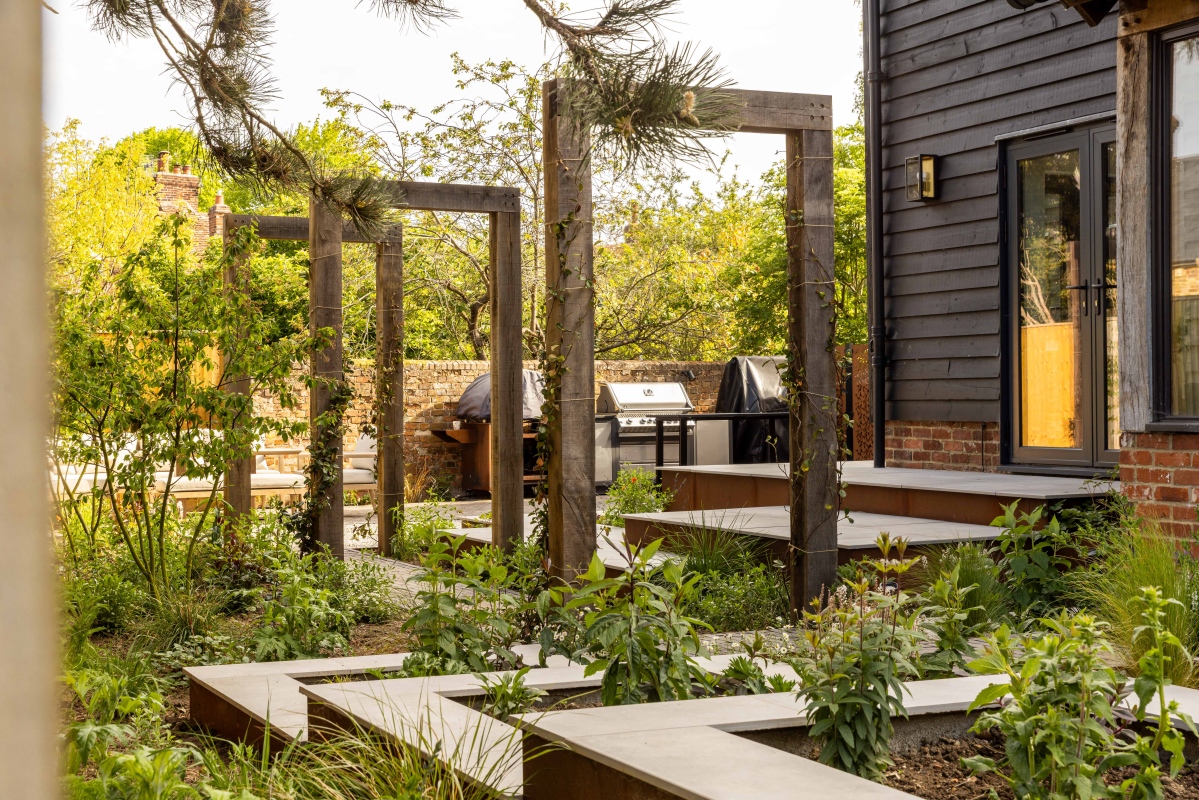
So what is clay soil, actually?
Clay is made of very fine mineral particles packed closely together. That density gives it two defining traits: it holds onto water and nutrients – both far more effectively than sandy soil ever could.
That translates into some real advantages:
- Nutrients stay put rather than washing away
- Moisture is available for longer through dry spells
- Clay soils can provide a fertile growing environment for established trees and shrubs, provided the soil structure and drainage are suitable.
- Overall, it’s a genuinely fertile base to build on
The trade-off is drainage. Through winter, clay lets water go slowly, so it can sit wet for longer than lighter soils. Come summer, especially in a dry spell, it does the opposite — shrinking, hardening, and cracking at the surface. Much of Kent, particularly across the Weald, sits on this kind of heavy clay, laid down over millions of years. The encouraging news is that plenty of plants have adapted to exactly these conditions and grow beautifully in them.
Is clay soil actually a good thing?
Genuinely, yes. Most garden designers wouldn’t call clay a disadvantage at all — some of the best-loved gardens in the country are built on it. Where sandy soil lets water and nutrients drain straight through, clay holds onto both, giving plants a much steadier supply right through the growing season.
The trick is simply matching the plant to the soil. Choose things that have evolved for heavier ground, and you end up with healthier plants, less maintenance, and a garden that holds up over time rather than fighting you every year.
Not all clay soils are the same
The first thing to work out is whether your clay just holds on to moisture or actually stays waterlogged for weeks at a time. Plenty of plants are happy in clay as long as lots of water can get away, but far fewer will put up with their roots sitting in wet, airless ground all winter. Beyond drainage, it’s worth checking your soil pH, how exposed the spot is, and how hard the ground bakes in summer, as all of these factors affect what will grow well.
Perennials that do well in clay
Astrantia major copes well with clay, as it likes the moisture the soil holds through the summer. The flowers are intricate and add real elegance to a border, and pollinators love them just as much as we do.


Asters carry a garden through autumn, flowering long after most summer perennials have finished – and they’re an important late nectar source for bees and butterflies. Most are easy to grow, although they may struggle in very heavy clay soils.


Alchemilla mollis is one of the more forgiving choices. It’s perfectly content in clay as long as the soil isn’t sitting permanently waterlogged.


Geranium sanguineum ‘Album’ is a reliable, low-growing perennial that tolerates clay soils, provided they are not waterlogged. Its delicate white flowers and spreading habit make it particularly useful at the front of a border.


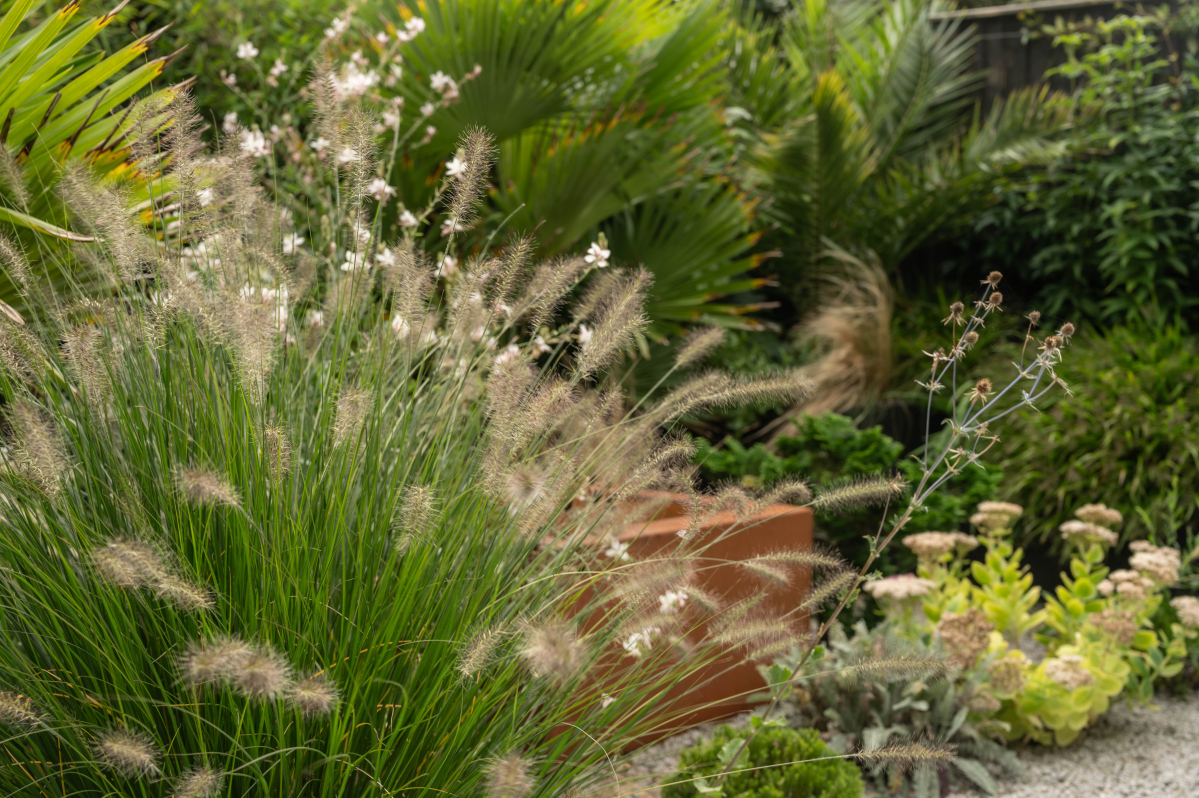
Ornamental grasses worth considering
Deschampsia cespitosa grows naturally in damp meadows, ditches and marshy ground, so clay suits it well.


Molinia caerulea, or purple moor grass, is particularly well suited to moisture-retentive clay soils that are neutral to acidic. Its airy flower stems catch the autumn light beautifully, especially when planted in repeated drifts through a border.


Calamagrostis x acutiflora ‘Karl Foerster’ is one we keep coming back to. It’s dependable, tolerates heavier soil well as long as it isn’t waterlogged all year, and gives lovely upright structure through winter.


Shrubs and a tree that earn their place
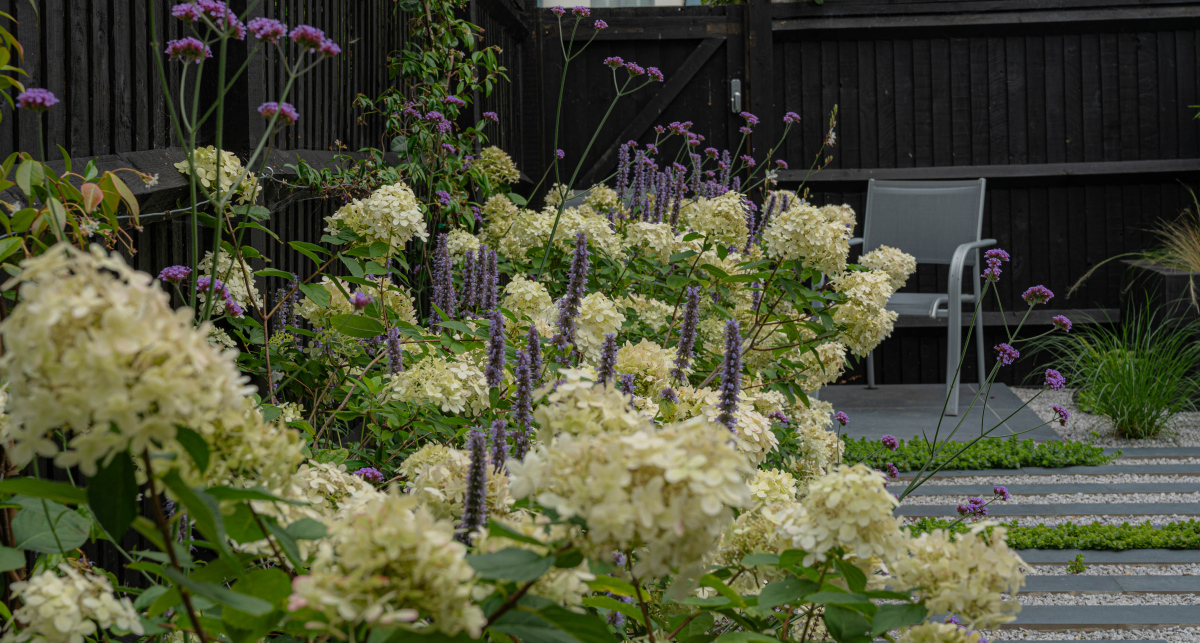
Hydrangea paniculata likes moisture-retentive soil and does well in full sun or partial shade, flowering from midsummer into autumn, with dried heads that keep the border interesting well into winter.


Cornus alba takes to clay particularly well and is grown as much for its bright winter stems as for its foliage — an annual prune keeps the colour at its best.


Amelanchier lamarckii appears in many of our designs. As a multi-stem tree, it has real presence, and it copes well with clay as long as drainage is decent – spring blossom, good summer foliage, strong autumn colour, and berries the birds go straight for.


What tends to struggle
Mediterranean plants such as lavender, rosemary and many shrubby salvias can struggle in heavy clay, particularly where winter drainage is poor. However, some herbaceous salvias can tolerate heavier soils, provided they are not waterlogged.
That doesn’t rule them out altogether. Raised beds, gravel gardens, well-drained spots, or the lighter coastal soils found in parts of Kent can all make these plants viable where they otherwise wouldn’t be.
Improving clay soil
Choosing the right plants matters most, but preparing the ground properly makes a real difference too. Working in plenty of organic matter before planting – well-rotted compost or leaf mould – gradually improves the structure and helps roots to establish themselves. An annual mulch on top helps protect the surface as well.
A few common questions
How do I know if I’ve got clay soil?
Moisten a handful of soil and squeeze it together. Clay-rich soil tends to feel sticky and can often be rolled into a sausage or flattened into a smooth ribbon without immediately crumbling.
Should I add sand to improve it?
Not really — organic matter, such as compost or leaf mould, does far more for clay than sand ever could.
Can lavender grow in clay at all?
Yes, but only with excellent drainage. A raised bed, gravel planting, or a naturally lighter patch of soil gives it a far better chance than heavy, wet clay.
The takeaway
Clay soil is often seen as a problem, but with the right approach it can be one of the best features of a garden. Choose plants suited to moisture-retentive ground and put in the work on soil structure early on, and clay will support a garden that looks good in every season.
At Ivy & Whyte, this approach is really the heart of how we design — working with what a garden already has rather than against it, so the planting we put in thrives for years rather than just surviving.